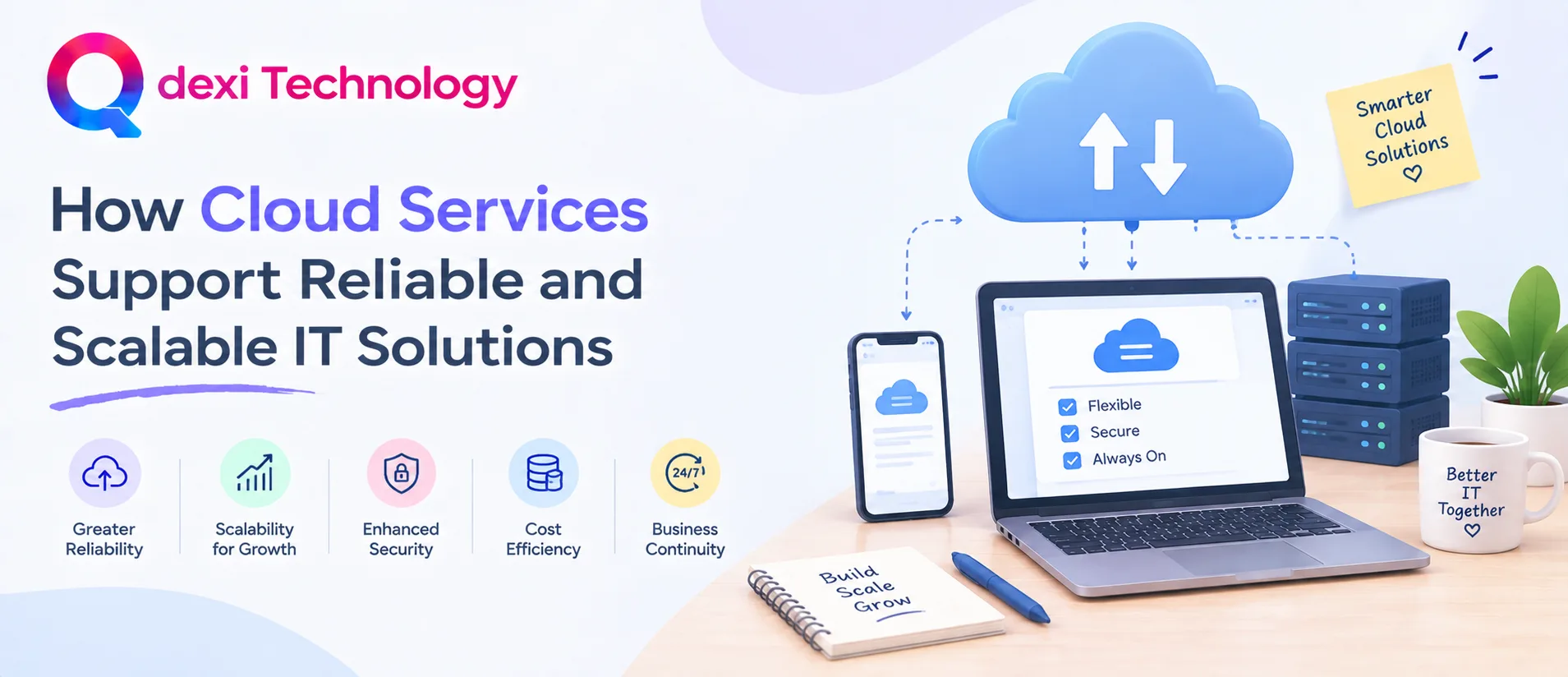
Businesses today depend on technology for almost every part of their operations. From managing customer information and business applications to supporting websites and digital services, companies need IT infrastructure that can remain reliable as their requirements change.
As businesses grow, traditional infrastructure may not always provide the flexibility needed to handle increasing workloads. This is where Cloud Services can offer a practical solution. Cloud technology allows businesses to access computing resources, storage, applications, and other IT capabilities without depending entirely on physical infrastructure.
A well-planned cloud strategy can help businesses improve flexibility, manage resources more efficiently, and prepare their IT environment for future growth.
What Are Cloud Services?
Cloud Services provide businesses with access to technology resources through internet-based infrastructure. Depending on their requirements, organizations can use cloud computing for storage, databases, applications, networking, hosting, backup, and other IT operations.
Instead of purchasing and maintaining every piece of infrastructure internally, businesses can use cloud resources according to their needs.
Common Types of Cloud Services
Businesses can use different types of cloud solutions depending on their objectives, including:
- Cloud storage for managing business files and data
- Cloud computing for processing applications and workloads
- Cloud databases for storing and managing information
- Cloud hosting for websites and applications
- Backup solutions for protecting important data
- Cloud-based software for business operations
The right combination depends on the size, industry, workload, and future plans of each organization.
How Cloud Services Support Scalability
Scalability is one of the major reasons businesses consider cloud technology. As a company grows, its IT requirements can increase significantly.
A business may need additional resources when:
- Website traffic increases
- New applications are launched
- Customer data grows
- More employees require access
- Online sales increase
- New locations or markets are added
With scalable cloud infrastructure, resources can be adjusted according to changing requirements. This can help businesses avoid being restricted by a fixed infrastructure setup.
Supporting Business Growth
A growing business should not have to completely redesign its IT infrastructure every time its requirements change. Cloud Services can provide an adaptable foundation that grows alongside the organization.
For example, an online business may experience a sudden increase in traffic during a seasonal promotion. A scalable cloud environment can help the business manage increased demand more effectively.
Improving IT Reliability
Reliable technology is essential for maintaining smooth business operations. System failures, hardware problems, or infrastructure disruptions can affect employees as well as customers.
Cloud environments can be designed with features such as redundancy, monitoring, backup, and recovery capabilities. These measures can help businesses prepare for potential disruptions.
Qdexi Technology can help businesses consider their infrastructure requirements and develop technology strategies that focus on reliability, scalability, and long-term usability.
Reducing Dependence on Physical Infrastructure
Traditional infrastructure often requires businesses to maintain physical servers and hardware. These systems may require space, maintenance, upgrades, and technical management.
Cloud technology can reduce the need to depend entirely on physical infrastructure. This allows organizations to focus more on their business operations while managing technology resources through flexible cloud environments.
Supporting Application Development
Cloud infrastructure can also play an important role in application development. Development teams often require separate environments for development, testing, staging, and production.
Cloud platforms can provide flexible environments that can be adjusted according to project requirements.
Helping Developers Work More Efficiently
Businesses using Laravel Development Services, for example, can benefit from flexible environments for developing, testing, and deploying web applications.
As an application grows, its infrastructure requirements may also change. Cloud resources can be adjusted to support those changing requirements without necessarily requiring major physical infrastructure investments.
Managing Growing Business Data
Modern businesses generate large amounts of data every day. Customer records, documents, transactions, reports, application data, and media files can quickly increase storage requirements.
Cloud Services can provide flexible storage solutions that help businesses manage growing volumes of information.
Benefits of Cloud Based Data Management
A properly managed cloud environment can help businesses with:
- Flexible storage capacity
- Easier access to authorized data
- Centralized information management
- Data backup and recovery
- Collaboration between teams
- Improved resource management
Businesses should also implement appropriate security controls to protect sensitive information stored in cloud environments.
Supporting E Commerce Businesses
Online businesses need infrastructure capable of handling changing customer demand. Website traffic can increase significantly during product launches, promotional campaigns, and seasonal sales.
For businesses operating e-Commerce websites, scalable cloud infrastructure can support the technology behind online stores.
Handling Changing Website Traffic
A flexible infrastructure can help businesses prepare for periods of higher demand. Cloud resources can support websites, databases, applications, and other components required to provide a smooth online shopping experience.
This makes scalability particularly valuable for businesses that experience significant variations in website traffic.
Enabling Remote Collaboration
Modern businesses often have employees working from different locations. Teams may need access to files, applications, communication platforms, and business information regardless of where they are working.
Cloud-based systems can make authorized access more flexible and support collaboration between geographically distributed teams.
Supporting Marketing and Sales Teams
For a lead generation company, cloud-based platforms can help marketing and sales teams work with shared campaign information, customer data, and reporting resources.
When teams can access the information they need through secure systems, collaboration can become more efficient.
Supporting Digital Marketing Operations
Cloud infrastructure can also support various digital marketing activities. Websites, landing pages, analytics tools, customer databases, and advertising platforms all depend on reliable technology.
Businesses working with a link building agency may manage multiple websites, content assets, reports, and campaign resources. A stable IT environment can help support these activities as digital campaigns expand.
Improving Digital Campaign Flexibility
Marketing requirements can change quickly. Businesses may launch new campaigns, create additional landing pages, or experience sudden increases in website visitors.
Scalable infrastructure can help organizations adapt to these changes more efficiently.
Improving Customer Relationship Management
Customer information needs to be accessible to authorized teams while remaining properly protected.
Cloud-based CRM Services can provide businesses with centralized platforms for managing customer interactions, sales information, communication records, and related data.
Creating Better Customer Experiences
When sales, marketing, and customer support teams have access to relevant information, they can respond to customers more effectively.
Cloud-based CRM solutions can therefore support both internal collaboration and customer relationship management.
Supporting Brand Communication
A business's technology infrastructure also supports the way customers interact with its brand. Websites, digital platforms, applications, and marketing materials all contribute to the overall customer experience.
Organizations investing in Corporate Branding & Messaging Services can benefit from reliable digital systems that allow their brand communication to remain consistent across different channels.
Maintaining a Consistent Digital Presence
A consistent digital presence can help businesses create stronger brand recognition. Reliable infrastructure can support the websites and platforms where customers interact with the business.
Helping Specialized Businesses
Different industries have different digital requirements. A healthcare business may need different systems from a retail company or a professional service provider.
For example, a dental marketing company may manage websites, digital campaigns, analytics, communication tools, and other online resources.
Cloud infrastructure can support these activities when it is planned around the organization's specific operational and security requirements.
Supporting Paid Advertising Campaigns
Digital advertising campaigns can sometimes result in sudden increases in website traffic. Businesses need landing pages and websites that can handle increased demand without creating unnecessary performance issues.
Organizations working with a ppc advertising agency can benefit from scalable infrastructure that supports their digital marketing assets.
Preparing for Campaign Traffic
Cloud scalability can help businesses prepare for changing traffic patterns, particularly when advertising campaigns generate higher visitor volumes.
Managing Creative Business Assets
Creative teams often work with large files such as images, videos, presentations, and high-resolution graphics.
Businesses using Print Design Services may need to store and share large design files throughout the production and approval process.
Flexible File Management
Cloud storage can provide teams with a convenient environment for managing creative resources while allowing authorized users to access files from different locations.
Benefits of Cloud Services for Businesses
When implemented according to business requirements, Cloud Services can provide several important advantages.
Key Benefits
- Scalability: Resources can be adjusted as business requirements change.
- Flexibility: Businesses can access technology resources according to their needs.
- Accessibility: Authorized users can access cloud-based resources from different locations.
- Business Continuity: Cloud infrastructure can support backup and recovery strategies.
- Cost Management: Businesses can reduce the need for extensive physical infrastructure.
- Collaboration: Cloud-based systems can support teams working across different locations.
- Future Readiness: Flexible infrastructure can make it easier to adapt to new technology requirements.
Why Businesses Need a Proper Cloud Strategy
Moving to the cloud should not be treated as simply transferring existing systems to an online environment. Businesses need to understand their applications, data, security requirements, workloads, and future objectives before choosing a cloud approach.
Important Factors to Consider
Before adopting cloud solutions, businesses should evaluate:
- Current IT infrastructure
- Business applications
- Data storage requirements
- Security and access controls
- Expected business growth
- Performance requirements
- Backup and recovery needs
- Future scalability
A clear strategy can help businesses avoid unnecessary complexity and make better use of their cloud investment.
How Qdexi Technology Can Support Cloud Solutions
Choosing the right technology approach can make a significant difference to the reliability and scalability of a business's IT environment.
Qdexi Technology can help businesses explore digital and technology solutions based on their operational requirements. By considering scalability, performance, accessibility, and infrastructure needs, businesses can work toward a more flexible technology environment.
Whether an organization is developing a new digital product, managing growing data, supporting an e-commerce platform, or improving its existing IT infrastructure, Cloud Services can provide a strong foundation for future development.
Conclusion
Businesses need IT infrastructure that can support their current operations while remaining flexible enough to handle future growth. Cloud Services provide organizations with scalable resources that can support applications, data management, remote collaboration, digital platforms, and business continuity.
From e-Commerce websites and application development to customer management and digital marketing, cloud technology can support a wide range of business requirements.
A carefully planned cloud strategy can help businesses improve flexibility, manage resources more effectively, and prepare for changing technology demands. With the right approach, Qdexi Technology can help organizations build reliable and scalable digital solutions that support their long-term business objectives.