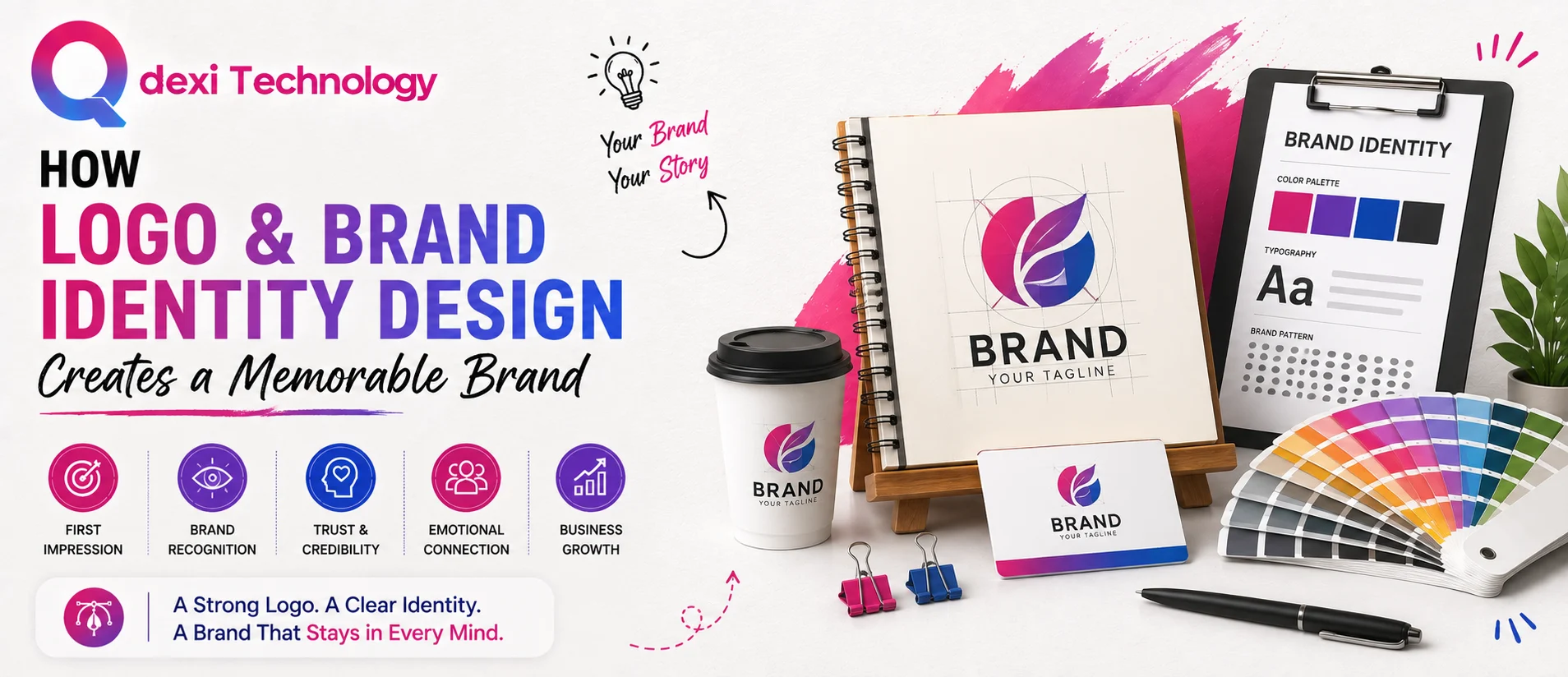
In a competitive digital marketplace, businesses need more than quality products or services to stand out. Customers are constantly exposed to new brands, advertisements, websites, and social media content. A strong visual identity can help a business become recognizable and leave a lasting impression. This is where Logo & Brand Identity Design plays an important role.
A logo may be the first visual element customers notice, but an effective brand identity goes much further. It combines colors, typography, graphics, messaging, and visual consistency to create a recognizable image for a business. When these elements work together, they can help customers remember a brand and develop greater confidence in it.
What Is Logo & Brand Identity Design?
Logo & Brand Identity Design refers to the process of creating a consistent visual representation of a business. A logo acts as an important symbol of the company, while the broader brand identity defines how the business looks and communicates across different platforms.
A complete brand identity may include:
- Logo design
- Brand colors
- Typography and font selection
- Marketing graphics
- Business cards and stationery
- Website visual elements
- Social media designs
- Packaging and promotional materials
- Brand guidelines
Together, these elements create a unified appearance that allows customers to recognize a company more easily.
Why Is a Memorable Brand Important?
Brand recognition can influence how customers perceive and remember a business. When people repeatedly see consistent visual elements, they can begin to associate those elements with a particular company.
A memorable brand can help businesses:
- Build stronger recognition
- Create a professional appearance
- Establish customer trust
- Stand out from competitors
- Communicate their personality
- Create consistent marketing materials
- Develop stronger customer connections
A well-designed identity does not simply make a company look attractive. It communicates what the business represents and helps create a recognizable presence.
Creating a Strong First Impression
First impressions can influence whether customers want to explore a business further. A poorly designed or inconsistent visual identity may make a company appear less professional, while a thoughtful design can communicate confidence and credibility.
A professional logo should be visually appealing without becoming unnecessarily complicated. It should also work across different formats, including websites, mobile screens, social media profiles, printed materials, and promotional content.
The goal is to create an identity that customers can recognize quickly while maintaining a professional and relevant appearance.
Consistency Builds Brand Recognition
Consistency is one of the most important aspects of successful branding. If a company uses different colors, fonts, logo styles, and visual designs across every platform, customers may find it difficult to recognize the brand.
Consistent branding ensures that customers receive a similar visual experience whether they visit a website, view a social media post, read an advertisement, or receive printed material.
Businesses should maintain consistency in:
- Logo placement and usage
- Brand color combinations
- Typography
- Graphic styles
- Photography and illustrations
- Marketing layouts
- Brand messaging
This consistency can gradually strengthen brand recognition and make the company easier to remember.
Choosing Colors That Communicate
Colors can influence how people perceive a brand. Different colors can create different visual impressions, so businesses should select a palette that reflects their personality and target audience.
For example, a technology company may prefer a modern and clean visual approach, while a creative business might use more expressive colors and design elements.
The important thing is not simply choosing attractive colors. The selected palette should work consistently across digital and offline marketing materials.
Typography Also Shapes Brand Identity
Fonts are another important part of branding. Typography can influence whether a brand appears modern, traditional, professional, friendly, or creative.
A business should choose fonts that are:
- Easy to read
- Suitable for its industry
- Consistent across marketing channels
- Compatible with digital and print formats
- Visually aligned with the brand personality
Using too many different fonts can make a design look confusing. A limited and carefully selected typography system usually creates a cleaner visual identity.
Connecting Design With Brand Personality
A memorable brand should reflect its personality. Before developing a visual identity, businesses should understand what they want customers to feel when interacting with them.
Important questions include:
- What does the business stand for?
- Who is the target audience?
- What makes the company different?
- Should the brand feel modern, professional, friendly, premium, or creative?
- How should customers describe the business?
Answering these questions can help designers create visuals that are more meaningful and aligned with the company's goals.
How Professional Design Supports Business Growth
Strong branding can support businesses across multiple marketing channels. Once a clear identity is established, companies can use it across websites, advertisements, social media, presentations, email campaigns, packaging, and other communication materials.
A consistent identity can also make marketing activities more efficient because businesses have established visual guidelines to follow. This helps different marketing materials feel connected rather than appearing as separate designs.
Companies looking for professional branding support can work with experienced design teams such as Qdexi Technology to develop visual solutions that match their business objectives and audience.
Common Mistakes to Avoid
Businesses should avoid several common branding mistakes when developing their identity.
1. Making the Logo Too Complicated
A complicated logo may be difficult to recognize and reproduce across different platforms. Simplicity often improves versatility.
2. Following Trends Without Strategy
Design trends can change quickly. A brand identity should remain relevant beyond a short-term trend.
3. Using Too Many Visual Elements
Excessive colors, fonts, graphics, and design effects can reduce clarity and make the brand difficult to recognize.
4. Ignoring Brand Consistency
Using different visual styles across platforms can weaken recognition and create an inconsistent customer experience.
5. Designing Without Understanding the Audience
A design should appeal to the intended audience rather than simply reflecting the personal preferences of the business owner.
Building a Brand Customers Remember
A memorable brand is created through repeated and consistent experiences. Logo & Brand Identity Design provides the visual foundation for those experiences by bringing together the logo, colors, typography, graphics, and overall design language.
When these elements are carefully planned and consistently applied, businesses can develop a stronger identity and make their communication more recognizable. Professional branding is therefore not just about creating an attractive logo; it is about building a visual system that supports long-term business communication.
Conclusion
A strong visual identity can help a business make a positive first impression, improve recognition, and communicate its personality more effectively. From the logo and color QdexiTechnology to typography and marketing graphics, every element contributes to how customers perceive and remember a brand.
For businesses aiming to establish a professional and recognizable presence, investing in strategic Logo & Brand Identity Design can be an important step toward long-term growth. With the right creative approach and consistent implementation, a brand can become more distinctive, trustworthy, and memorable in an increasingly competitive marketplace.
#LogoDesign #BrandIdentityDesign #BrandIdentity #LogoAndBranding #BrandDesign #CreativeDesign #VisualIdentity #BrandRecognition #BusinessBranding #ProfessionalBranding #GraphicDesign #DigitalBranding #BrandStrategy #MemorableBrand #BusinessGrowth #QdexiTechnology #BrandAwareness #CreativeBranding #MarketingDesign #VisualBranding