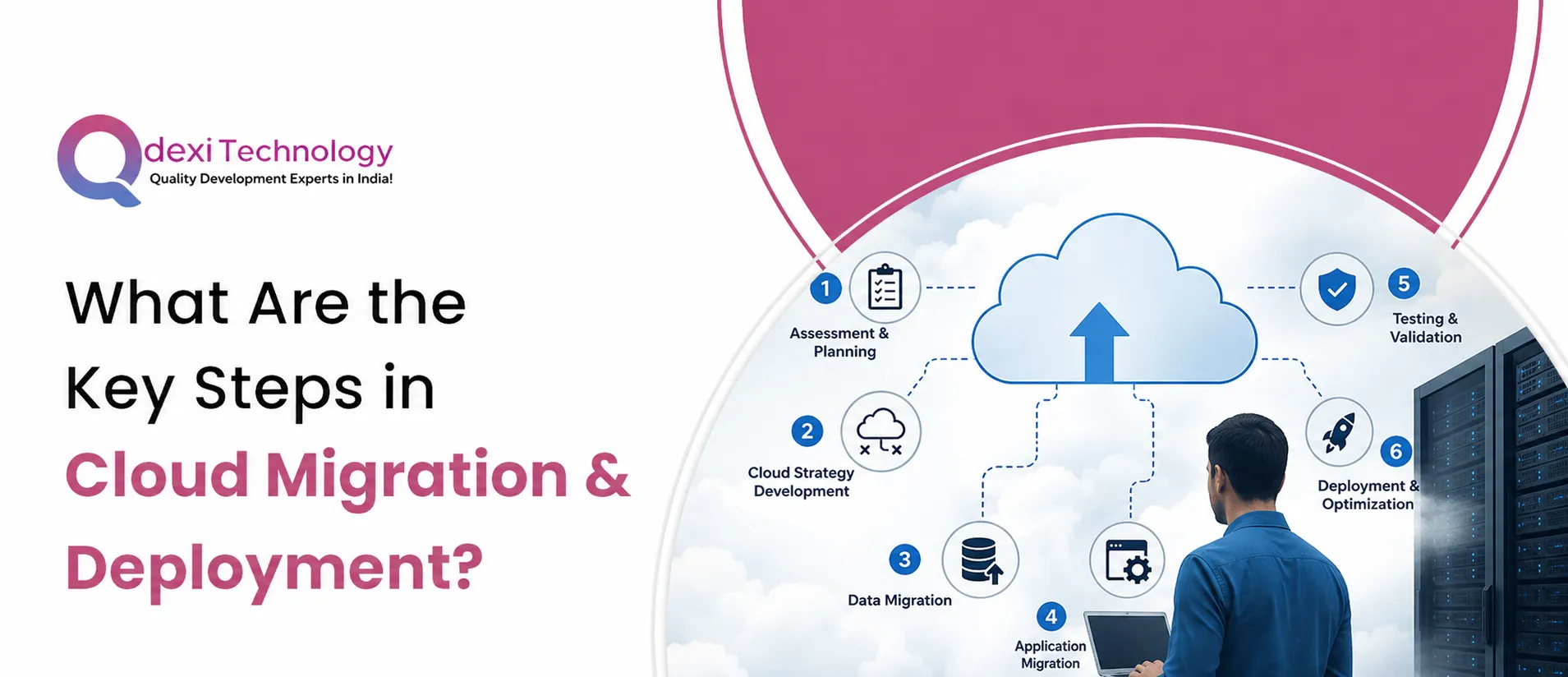
As businesses continue to adopt digital transformation strategies, cloud technology has become an essential part of modern IT infrastructure. Companies across industries are moving their applications, databases, and systems to cloud platforms to improve flexibility, scalability, and operational efficiency. However, successful Cloud migration & deployment requires careful planning, strong security practices, and a well-defined migration process.
Without proper preparation, businesses may face downtime, security risks, or performance issues during migration. This is why organizations focus heavily on creating a reliable Cloud Migration Strategy before starting the process.
Understanding Cloud Migration
Cloud Migration refers to the process of moving applications, data, and business operations from traditional on-premise systems to cloud-based environments.
Businesses may migrate to:
- Public cloud platforms
- Private cloud environments
- Hybrid cloud systems
Cloud migration helps organizations modernize infrastructure while reducing hardware and maintenance costs.
Importance of Cloud Migration & Deployment
Modern businesses require flexible and scalable IT systems. Traditional infrastructure often struggles to support growing digital demands.
The benefits of Cloud migration & deployment include
- Better scalability
- Improved remote access
- Reduced infrastructure costs
- Faster application deployment
- Improved business continuity
- Enhanced data backup and disaster recovery
These advantages make cloud adoption an important step for organizations seeking long-term growth.
Step 1: Assess Existing Infrastructure
The first step in any migration project is evaluating the current IT environment.
Businesses must analyze:
- Existing applications
- Server infrastructure
- Storage systems
- Security requirements
- Network performance
This assessment helps organizations identify which systems should be migrated and which applications require upgrades before deployment.
A proper evaluation also helps create an effective Cloud Migration Strategy.
Step 2: Define Migration Goals
Every business has different objectives when moving to the cloud.
Some common goals include:
- Improving scalability
- Increasing security
- Supporting remote work
- Reducing operational costs
- Enhancing system performance
Clearly defined goals help businesses select the right cloud solutions and deployment methods.
Step 3: Choose the Right Cloud Platform
Selecting the correct cloud platform is one of the most important steps in Cloud Migration and Deployment Services.
Popular cloud providers include:
- Amazon Web Services (AWS)
- Microsoft Azure
- Google Cloud Platform
Organizations must compare features such as:
- Security tools
- Pricing models
- Scalability
- Compliance support
- Integration capabilities
Many businesses also monitor Azure updates to stay informed about new features and cloud improvements.
Step 4: Develop a Cloud Migration Strategy
A successful Cloud Migration Strategy helps businesses avoid disruptions during migration.
The strategy usually includes:
- Migration timelines
- Resource allocation
- Risk management plans
- Backup procedures
- Security policies
Businesses often decide between:
- Rehosting (lift and shift)
- Refactoring applications
- Rebuilding systems for cloud-native environments
Careful planning ensures smoother deployment and reduced downtime.
Step 5: Backup and Data Protection
Before migration begins, organizations must create secure backups of all important data.
This helps:
- Prevent data loss
- Ensure recovery during failures
- Protect business continuity
Data encryption and access control systems should also be implemented to maintain security during migration.
Step 6: Application and Data Migration
Once planning is complete, businesses can begin moving applications and data to the cloud.
This process may include:
- Migrating databases
- Transferring applications
- Moving virtual machines
- Configuring cloud storage
During this stage, IT teams monitor system performance to ensure that applications work correctly in the new environment.
Professional Cloud Migration and Deployment Services often use automated tools to simplify this process.
Step 7: Testing and Validation
Testing is a critical part of successful cloud deployment.
Organizations must verify:
- Application performance
- Security configurations
- Data accessibility
- Network connectivity
- Backup functionality
Testing helps identify technical issues before systems go live.
Performance optimization is also performed during this stage to improve efficiency.
Step 8: Cloud Deployment and Go-Live
After successful testing, businesses can fully deploy their cloud infrastructure.
The deployment stage involves
- Activating cloud applications
- Connecting users to systems
- Monitoring system stability
- Ensuring operational continuity
This phase requires careful monitoring to prevent disruptions during transition.
Step 9: Ongoing Monitoring and Optimization
Cloud migration does not end after deployment. Continuous monitoring is necessary to maintain performance and security.
Businesses regularly monitor:
- System usage
- Storage consumption
- Application performance
- Security threats
- Operational costs
Cloud providers frequently release updates and new features, including important Azure updates, which help improve cloud services and security.
Importance of Security in Cloud Migration
One of the main issues with cloud adoption is security.
Organizations must implement:
- Multi-factor authentication
- Data encryption
- Identity management systems
- Firewall protection
- Threat monitoring tools
Strong security practices help protect sensitive information during and after migration.
Challenges in Cloud Migration
Although cloud adoption offers many benefits, businesses may face challenges such as:
- Migration complexity
- Downtime risks
- Compatibility issues
- Security concerns
- Cost management difficulties
Working with experienced Cloud Migration and Deployment Services providers helps reduce these risks.
Role of Automation in Cloud Deployment
Automation tools are becoming increasingly important in cloud environments.
Automation helps:
- Speed up deployments
- Reduce manual errors
- Improve scalability
- Simplify infrastructure management
Modern cloud platforms use automation to improve operational efficiency and system reliability.
Future of Cloud Migration
The future of Cloud Migration is evolving rapidly with emerging technologies such as:
- Artificial intelligence
- Edge computing
- Serverless architecture
- Multi-cloud environments
Businesses are increasingly adopting advanced cloud solutions to remain competitive in digital markets.
Conclusion
Successful Cloud migration & deployment requires careful planning, strong security, and continuous monitoring. From infrastructure assessment and strategy development to deployment and optimization, every step plays an important role in ensuring smooth cloud adoption.
By using professional Cloud Migration and Deployment Services, businesses can reduce migration risks and improve operational efficiency. A strong Cloud Migration Strategy, combined with ongoing monitoring and awareness of important Azure updates, helps organizations maximize the benefits of modern cloud technology. As cloud adoption continues to grow, businesses that invest in secure and scalable cloud solutions will be better prepared for future digital transformation and business growth.
#CloudMigration #CloudDeployment #CloudComputing #AzureCloud #AWSCloud #CloudInfrastructure #CloudSecurity #DigitalTransformation #CloudMigrationStrategy #AzureUpdates #CloudServices #BusinessTechnology #ITInfrastructure #CloudSolutions #CloudMigrationAndDeployment