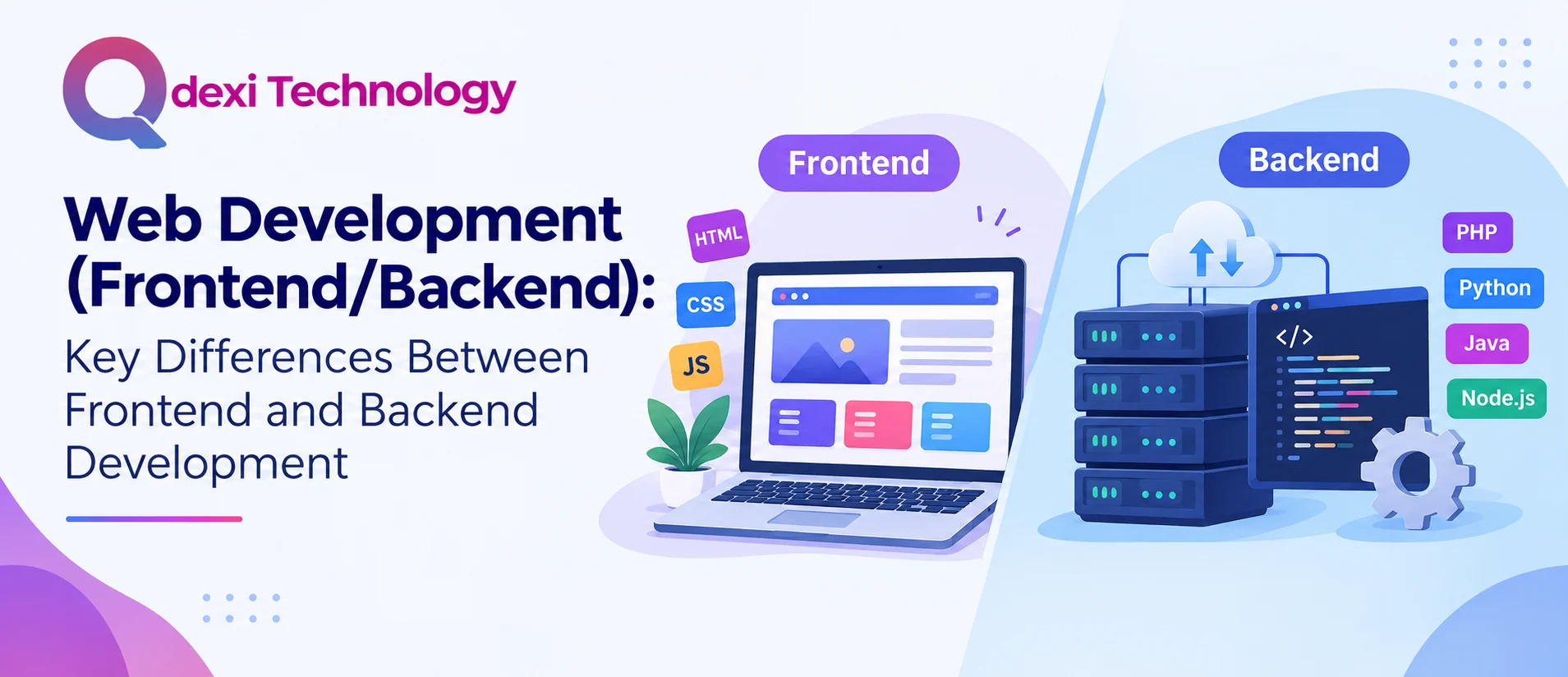
A modern website is much more than what users see on their screens. Behind every smooth navigation experience, interactive feature, form, and online transaction, there is a combination of technologies working together. These technologies are generally divided into two major areas: frontend development and backend development.
Understanding these two sides is important for businesses planning a reliable digital presence. Web Development (Frontend/Backend) brings together the visual experience users interact with and the technical systems responsible for processing information behind the scenes. Qdexi Technology uses this broader development perspective to help businesses build websites that are functional, scalable, and aligned with their digital requirements.
What Is Frontend Development?
Frontend development focuses on the part of a website that users directly see and interact with. It includes the layout, navigation, buttons, forms, animations, images, typography, and other visual elements that create the user experience.
Frontend developers typically work with technologies such as HTML, CSS, and JavaScript, along with modern frameworks and libraries. Their objective is to make websites responsive, accessible, visually consistent, and easy to navigate across different devices.
For example, when a visitor opens a business website and clicks a navigation menu, fills out a form, or interacts with a product section, these visible interactions are primarily supported by frontend development.
A strong frontend can also contribute to a website's overall performance. Businesses investing in an Orlando Web Design Company may focus on creating interfaces that provide a consistent experience for visitors while reflecting their brand identity.
What Is Backend Development?
Backend development focuses on the server side of a website or web application. While users may not directly see the backend, it plays an essential role in processing requests, managing databases, handling authentication, and delivering information to the frontend.
Backend development can involve programming languages, frameworks, servers, databases, and APIs. When a user submits a registration form, places an order, or logs into an account, backend systems process the information and perform the required operations.
A reliable backend helps ensure that websites can handle data securely and efficiently. This becomes particularly important for businesses operating e-commerce platforms, customer portals, booking systems, and other data-driven applications.
Frontend and Backend Working Together
Frontend and backend development are different, but they cannot operate effectively in isolation. The frontend provides the user-facing experience, while the backend manages the underlying logic and data.
Consider an online shopping website. The frontend displays products, prices, images, and shopping cart controls. When a customer adds an item to the cart, the backend processes that request and communicates with the database to maintain the appropriate information.
This connection allows users to experience a seamless website while complex operations take place in the background.
Key Differences Between Frontend and Backend
The primary difference between frontend and backend development is their area of responsibility.
Frontend development focuses on:
- User interface and visual presentation
- Website responsiveness
- Navigation and interactive elements
- Browser-based functionality
- User experience
Backend development focuses on:
- Server-side processing
- Database management
- APIs and application logic
- Authentication and authorization
- Data processing and storage
Both areas require specialized technical knowledge and contribute to the overall quality of a website.
Why Businesses Need Both
A visually attractive website may not provide a good business experience if its backend is unreliable. Similarly, a technically powerful backend may not deliver value if the frontend is difficult to use.
Businesses therefore need a balanced development approach. Web Development (Frontend/Backend) helps connect user experience with technical functionality, creating websites that can support both current requirements and future expansion.
This becomes increasingly important for businesses working with an Online Digital Marketing Agency or an Online Marketing Company. Marketing campaigns may drive large numbers of visitors to a website, making performance, usability, and technical stability essential.
Supporting SEO and Digital Marketing
Development decisions can also influence how effectively a website supports digital marketing activities. Fast-loading pages, responsive layouts, logical structures, and accessible content can contribute to a better online experience.
Businesses may work with an Orlando SEO Company or a Pittsburgh SEO Company to improve their visibility, while developers ensure that the underlying website provides a strong technical foundation.
Similarly, organizations using Online Marketing Services may need websites that can support landing pages, analytics tools, lead forms, tracking systems, and other marketing requirements.
Building Websites for Long Term Growth
A website should be designed with future requirements in mind. Businesses may eventually add new features, integrate third-party services, introduce customer dashboards, or expand their digital offerings.
Qdexi Technology can approach Web Development (Frontend/Backend) with an emphasis on functionality, usability, scalability, and maintainability. A coordinated development process can make it easier to improve the website as business requirements change.
Technical development can also complement services provided by an Online Reputation Management Company or a Professional SEO Company In USA, giving businesses a stronger foundation for their broader digital presence.
Conclusion
Frontend and backend development serve different purposes, but both are essential to creating a successful modern website. Frontend development focuses on what users see and experience, while backend development manages the logic, data, and systems that make website functionality possible.
By bringing these two areas together, Web Development (Frontend/Backend) can help businesses create reliable, scalable, and user-friendly digital platforms. With the right development approach, Qdexi Technology can help organizations build web experiences that support their operational requirements while providing a strong foundation for future digital growth.