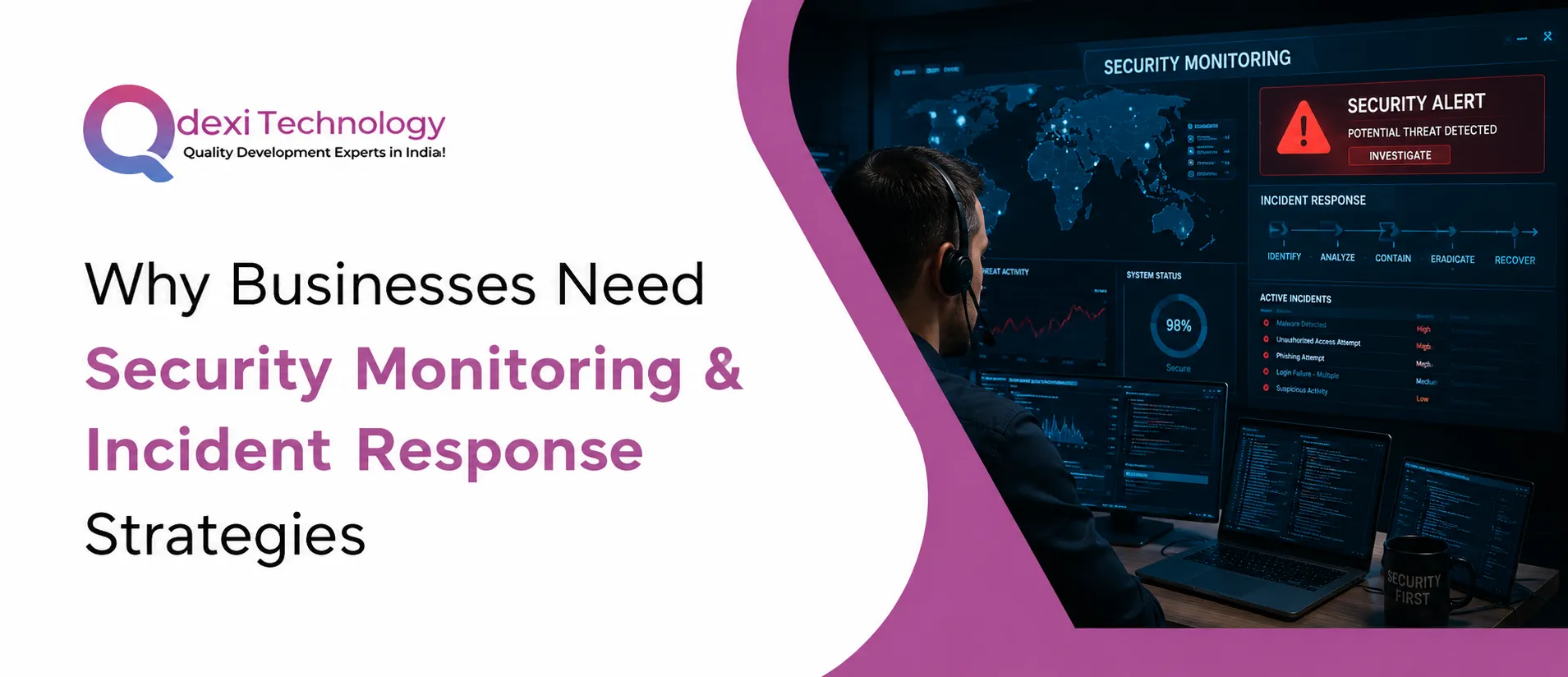
In today’s digital landscape, businesses face increasing cybersecurity threats ranging from ransomware attacks to data breaches and unauthorized access attempts. As organizations rely more on cloud systems, online platforms, and digital operations, protecting sensitive information has become a top priority. This is why companies are investing in strong security monitoring & incident response strategies to identify threats quickly and minimize damage.
Before understanding why these strategies are important, it is essential to know what security monitoring and incident response actually mean.
What Is Security Monitoring & Incident Response?
Security monitoring & incident response refers to the process of continuously tracking IT systems, networks, and applications to detect suspicious activities and respond to cybersecurity threats effectively.
Security Monitoring
Security monitoring involves observing systems in real time to identify the following:
- Unauthorized access attempts
- Malware activity
- Data breaches
- Network vulnerabilities
- Suspicious user behavior
This process helps businesses identify risks before they become major security incidents.
Incident Response
Incident response is the process of managing and resolving cybersecurity incidents after they are detected.
A proper security incident response plan usually includes:
- Detecting the issue
- Containing the threat
- Investigating the incident
- Recovering systems
- Preventing future attacks
Together, security monitoring and incident response create a strong defense system for businesses.
Why Security Monitoring Is Important for Businesses
Modern businesses operate in highly connected digital environments. Without continuous monitoring, organizations may fail to detect cyber threats until significant damage has already occurred.
Early Threat Detection
One of the biggest advantages of security monitoring and incident management is early detection. Real-time monitoring helps businesses identify unusual activities before attackers can cause serious harm.
Reduced Downtime
Cyberattacks can disrupt operations and lead to financial losses. Effective monitoring and response strategies help reduce downtime and restore systems quickly.
Improved Data Protection
Businesses handle sensitive customer and company data daily. Monitoring systems help protect this information from theft or unauthorized access.
Role of Incident Response in Cybersecurity
Detecting threats alone is not enough. Businesses also need a structured response plan to manage incidents effectively.
A strong security incident response strategy helps organizations:
- Minimize damage
- Recover systems faster
- Protect customer trust
- Maintain business continuity
Without a response plan, businesses may struggle to handle cyber incidents efficiently.
Security Monitoring and Incident Response in Cloud Computing
As companies move operations to the cloud, cybersecurity challenges continue to evolve. This has increased the importance of security monitoring and incident response in cloud computing.
Cloud environments require continuous monitoring because
- Data is accessed remotely
- Multiple devices connect to systems
- Cloud applications face external threats
Cloud-focused monitoring tools help businesses
- Detect unusual login attempts
- Monitor cloud workloads
- Protect cloud storage systems
- Prevent unauthorized access
Organizations using cloud infrastructure often rely on advanced cybersecurity service providers for better protection and faster incident response.
Benefits of Security Monitoring & Incident Response Strategies
1. Faster Threat Detection
Continuous monitoring identifies suspicious activities in real time, allowing businesses to act quickly.
2. Better Risk Management
Organizations can identify vulnerabilities and improve their overall security posture.
3. Enhanced Compliance
Many industries require businesses to follow cybersecurity regulations and data protection standards.
4. Improved Customer Trust
Customers are more likely to trust businesses that prioritize cybersecurity and data protection.
5. Reduced Financial Losses
Quick detection and response help prevent expensive downtime and data recovery costs.
Importance of Security Auditing and Monitoring
Another critical part of cybersecurity is security auditing and monitoring. Auditing involves reviewing systems, policies, and security controls to identify weaknesses.
Regular audits help businesses:
- Evaluate security performance
- Ensure compliance with regulations
- Detect outdated systems
- Improve incident response strategies
When combined with monitoring, auditing creates a more secure and resilient IT environment.
Common Cybersecurity Threats Businesses Face
Modern businesses encounter several types of cyber threats, including the following:
- Ransomware attacks
- Phishing scams
- Malware infections
- Insider threats
- Data breaches
- DDoS attacks
A strong security monitoring and incident response framework helps organizations detect and respond to these threats efficiently.
Role of Cybersecurity Services
Many businesses choose professional cybersecurity service providers to manage their security operations.
These services often include:
- 24/7 monitoring
- Threat detection
- Incident response support
- Vulnerability assessments
- Security audits
Outsourcing cybersecurity allows businesses to access expert support and advanced security technologies.
Challenges in Security Monitoring and Incident Response
Although these strategies are essential, businesses may face challenges such as the following:
- Large volumes of security data
- Shortage of cybersecurity professionals
- Increasingly sophisticated attacks
- Complex cloud environments
Businesses need to invest in automation, employee training, and contemporary tools to address these problems.
Future of Security Monitoring and Incident Response
The future of cybersecurity is becoming more advanced with technologies like the following:
- Artificial Intelligence (AI)
- Machine learning
- Automated threat detection
- Predictive analytics
These innovations will improve the efficiency of security monitoring & incident response systems by enabling faster and smarter threat management.
Conclusion
In an era of growing cyber threats, businesses can no longer rely on traditional security methods alone. Continuous security monitoring and incident response strategies are essential for protecting systems, data, and business operations.
From early threat detection to rapid recovery, effective security incident response helps organizations minimize risks and maintain customer trust. With the rise of cloud infrastructure, security monitoring and incident response in cloud computing have become even more important for modern enterprises. By investing in proper security auditing and monitoring and partnering with reliable cybersecurity service providers, businesses can build stronger defenses against evolving cyber threats and ensure long-term operational security.