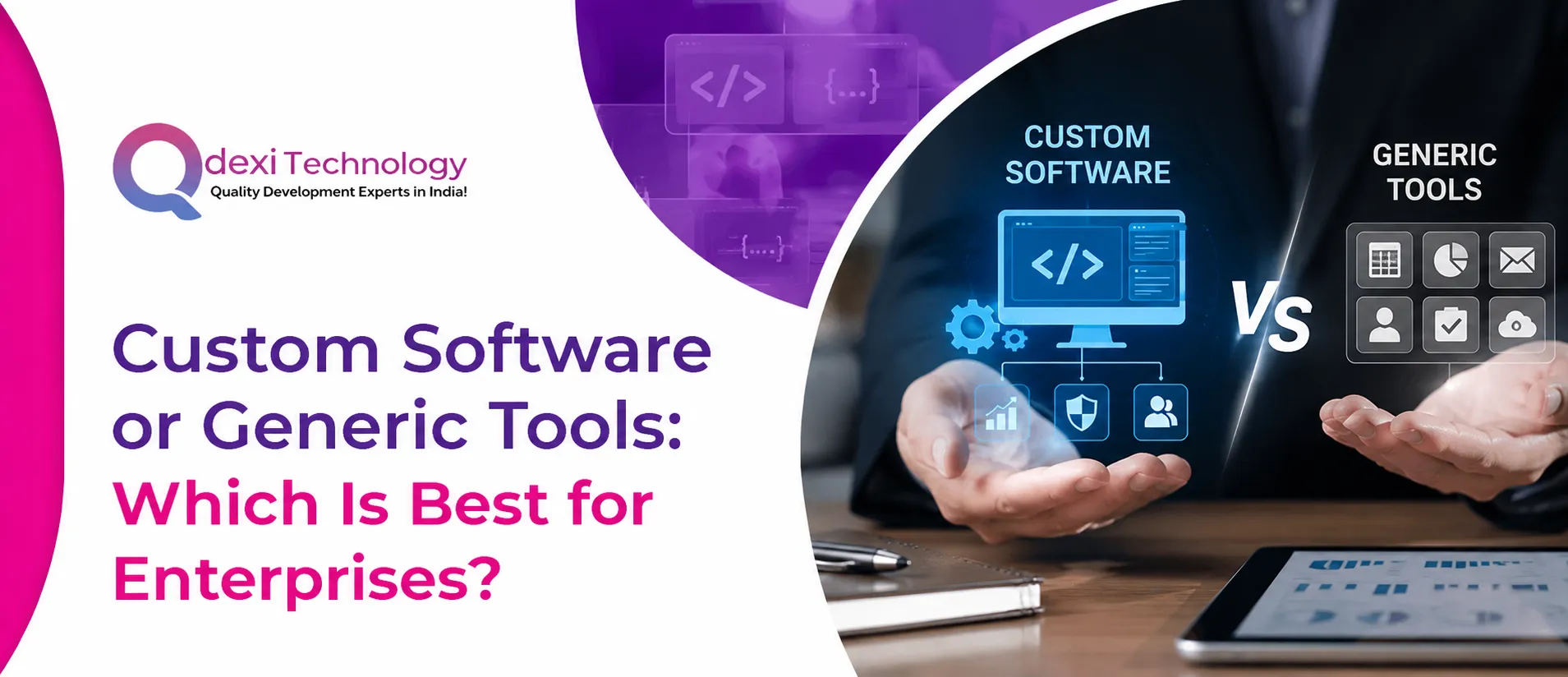
In today’s competitive business environment, enterprises rely heavily on technology to manage operations, improve productivity, and deliver better customer experiences. One of the biggest decisions companies face is whether to use generic software tools or invest in tailored business applications. Both options have advantages, but the right choice depends on business goals, scalability, and operational requirements.
Before comparing them, it is important to understand what custom software and generic tools actually mean.
What Are Generic Tools?
Generic tools are pre-built software products designed for a broad audience. These applications are created to meet common business needs and are usually available as ready-to-use solutions.
Examples include:
- CRM software
- Accounting tools
- Project management platforms
- Email marketing software
These tools are often affordable and quick to implement because they are already developed and tested.
What Are Custom Software Solutions?
Applications created especially to meet the particular needs of an organization are known as custom software solutions. Instead of using standard features built for everyone, enterprises can create software that aligns perfectly with their workflows and goals.
Custom software development allows organizations to:
- Add personalized features
- Integrate with existing systems
- Improve scalability
- Enhance security
This approach is ideal for businesses with complex operations or specialized requirements.
Why Enterprises Need the Right Software
Software plays a critical role in modern business operations. The right technology can:
- Improve efficiency
- Reduce manual work
- Increase productivity
- Support growth and expansion
- Enhance customer experiences
Choosing between generic tools and custom software solutions can directly impact long-term business success.
Advantages of Generic Tools
1. Lower Initial Cost
Generic software is usually subscription-based or available at a fixed price, making it more affordable for small businesses or startups.
2. Faster Implementation
Since the software is already developed, businesses can start using it quickly without waiting for development processes.
3. Regular Updates
Most generic software providers offer regular updates, bug fixes, and new features automatically.
4. User Support and Documentation
Popular tools often provide tutorials, customer support, and large user communities for assistance.
Limitations of Generic Tools
Despite their benefits, generic tools also have some limitations.
Limited Customization
These tools are designed for general users, which means businesses may not get features tailored to their exact needs.
Scalability Issues
As enterprises grow, generic tools may struggle to handle complex workflows or large-scale operations.
Integration Challenges
Some software may not integrate smoothly with existing enterprise systems.
Unnecessary Features
Businesses often pay for features they never use, which can reduce efficiency.
Benefits of Custom Software Development
1. Tailored to Business Needs
One of the biggest advantages of custom software development is personalization. Businesses get exactly the features they need without unnecessary extras.
2. Better Scalability
Custom applications can grow alongside the business. Enterprises can add features and functionalities as their needs evolve.
3. Improved Integration
Custom systems can integrate seamlessly with existing tools, databases, and workflows.
4. Enhanced Security
Enterprises dealing with sensitive information often prefer custom software solutions because they provide stronger security controls and reduced exposure to common threats.
5. Competitive Advantage
Unique software can help businesses streamline operations and stand out from competitors.
Challenges of Custom Software Development
Although custom software offers many benefits, there are also some challenges to consider.
Higher Initial Investment
Developing software from scratch requires time, expertise, and financial resources.
Longer Development Time
Unlike ready-made tools, custom software takes time to design, develop, test, and deploy.
Ongoing Maintenance
Businesses are responsible for updates, maintenance, and improvements after deployment.
However, for many enterprises, the long-term benefits outweigh these initial challenges.
Custom Software vs Generic Tools: Key Comparison
|
Feature |
Generic Tools |
Custom Software |
|
Cost |
Lower upfront cost |
Higher initial investment |
|
Customization |
Limited |
Fully customizable |
|
Scalability |
Moderate |
Highly scalable |
|
Integration |
May have limitations |
Seamless integration |
|
Deployment Speed |
Fast |
Takes more time |
|
Security |
Standard security |
Advanced tailored security |
This comparison helps enterprises evaluate which solution aligns better with their operational needs.
When Should Enterprises Choose Generic Tools?
Generic software may be the right option if:
- The business has basic operational needs
- Budget is limited
- Quick implementation is required
- Standard workflows are sufficient
Small businesses and startups often begin with generic tools before transitioning to custom systems.
When Is Custom Software the Better Choice?
Enterprises should consider custom software solutions when:
- Operations are complex
- Scalability is a priority
- Security requirements are high
- Unique workflows need support
- Integration with multiple systems is necessary
Large organizations often benefit more from custom software development because it provides flexibility and long-term efficiency.
Future of Enterprise Software
The future of enterprise technology is moving toward smarter, more flexible solutions. Trends such as AI integration, cloud computing, and automation are driving demand for customized software systems.
Businesses increasingly want software that adapts to their workflows rather than forcing them to change operations around generic tools.
This growing demand is making custom software development more valuable for enterprises worldwide.
Conclusion
Both generic tools and custom software solutions have their own advantages. Generic software is affordable and easy to implement, while custom applications provide flexibility, scalability, and better integration.
For enterprises with unique business processes and long-term growth plans, custom software development often delivers greater value despite the higher initial investment. Ultimately, the best choice depends on business goals, budget, and operational complexity. By carefully evaluating their needs, enterprises can select the right technology solution to support growth, efficiency, and innovation.