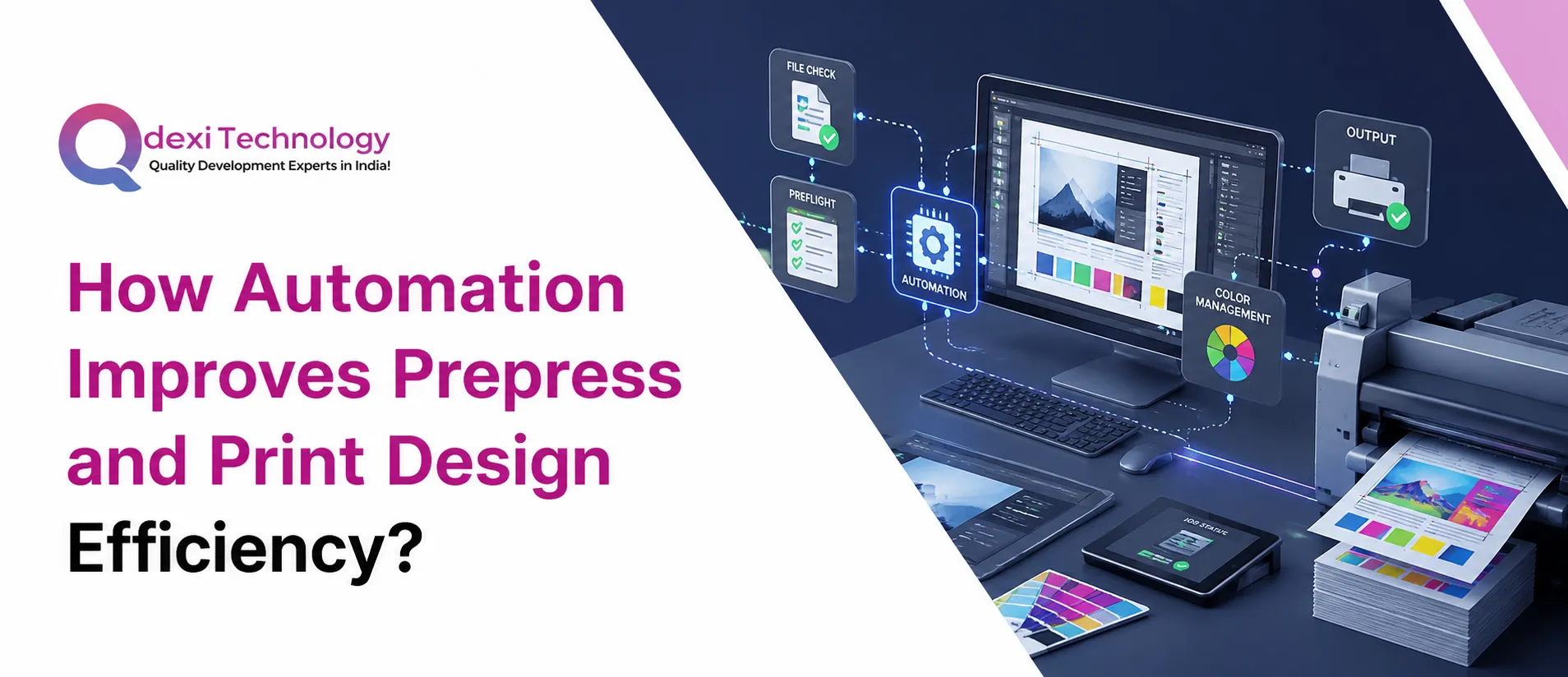
In the modern printing and publishing industry, speed, accuracy, and consistency are critical for success. Businesses are constantly looking for ways to reduce errors, save time, and improve production quality. One of the most effective solutions is automation in Prepress & Print Design workflows.
The process of getting digital data ready for printing is called prepress. It includes tasks like layout correction, color management, proofing, and file optimization. When automation is introduced into this process, it significantly improves efficiency and reduces manual workload.
What Is Prepress in Print Design?
Before understanding automation, it is important to know what prepress means.
Prepress and Print Design refers to all the steps taken before a file is sent to the printing press. These steps ensure that the final output is accurate and high-quality.
Prepress typically includes the following:
- File checking and formatting
- Image resolution adjustment
- Color correction
- Typography alignment
- Proofing and corrections
- Final print preparation
Without proper prepress work, printing errors can lead to wasted time, resources, and money.
Role of Automation in Prepress Workflow
Automation in prepress means using software tools and systems to handle repetitive and time-consuming tasks. Instead of manually checking every file, automation tools perform these tasks quickly and accurately.
Modern pre-press software can
- Detect file errors automatically
- Adjust colors based on print requirements
- Standardize layouts
- Optimize images for printing
- Generate print-ready files
This reduces human effort and improves production speed.
How Automation Improves Efficiency
1. Reduces Human Errors
Manual prepress work often leads to mistakes such as incorrect color settings, missing fonts, or misaligned layouts. Automation tools help eliminate these issues by automatically checking files before printing.
This ensures higher accuracy in prepress design and reduces costly reprints.
2. Speeds Up Production Time
Traditional prepress workflows can be time-consuming, especially when handling large volumes of files.
With automation:
- File processing becomes faster
- Repetitive tasks are completed instantly
- Approval cycles are shortened
This helps printing companies meet tight deadlines efficiently.
3. Improves Consistency Across Projects
Consistency is very important in printing, especially for branding materials.
Automation ensures:
- Uniform color output
- Consistent layout structure
- Standardized formatting
This is especially useful for large-scale Pre-press Designer Projects, where multiple files need to follow the same design guidelines.
Importance of Prepress Checklists in Automation
Even with automation, structured workflows are still important. A prepress checklist helps ensure that all necessary steps are followed before printing.
A typical checklist includes the following:
- Image resolution check
- Bleed and margin settings
- Font embedding
- Color mode verification
- Final proof review
Automation tools can integrate these checklists into their systems, ensuring nothing is missed during the process.
Role of Prepress Software in Modern Printing
Modern prepress software plays a major role in automating print preparation tasks. These tools are designed to simplify complex processes and improve workflow efficiency.
Popular features include:
- Automated file preflighting
- Color management systems
- PDF optimization tools
- Layout correction features
- Batch processing capabilities
By using advanced software, printing teams can complete more projects in less time with fewer errors.
Impact on Prepress Design Quality
Automation does not replace creativity; instead, it enhances quality control in prepress design.
Designers can focus more on creativity while automation handles technical tasks such as the following:
- Error detection
- File formatting
- Print optimization
This results in better-designed and more accurate print outputs.
Benefits for Prepress Companies
A modern prepress company that uses automation gains a strong competitive advantage.
Key benefits include the following:
- Faster project turnaround
- Lower operational costs
- Improved customer satisfaction
- Reduced rework and waste
- Better scalability for large projects
Automation allows companies to handle more clients without increasing workload significantly.
Role in Pre-press Designer Projects
In Pre-press Designer Projects, automation helps designers focus on creative tasks instead of repetitive technical corrections.
Designers can:
- Work on multiple projects simultaneously
- Reduce time spent on manual adjustments
- Improve collaboration with printing teams
This leads to smoother project execution and higher productivity.
Common Automated Prepress Processes
Some of the most common automated tasks in prepress include:
- Preflight checks for errors
- Automatic color conversion (RGB to CMYK)
- Image resizing and optimization
- Font detection and embedding
- Layout alignment corrections
These automated processes significantly reduce manual workload and improve accuracy.
Challenges in Prepress Automation
Automation has numerous advantages, but there are drawbacks as well:
- High initial software costs
- Learning curve for new tools
- Need for skilled operators
- Occasional software limitations
However, the long-term benefits usually outweigh these challenges.
Future of Automation in Prepress and Print Design
The future of Prepress & Print Design is becoming more automated and intelligent. Emerging technologies such as AI and machine learning are transforming how print workflows operate.
Future trends include the following:
- AI-powered error detection
- Fully automated print workflows
- Cloud-based prepress systems
- Real-time collaboration tools
These advancements will further improve speed, accuracy, and efficiency in the printing industry.
Conclusion
Automation is revolutionizing the printing industry by improving speed, accuracy, and efficiency in prepress workflows. From reducing errors to enhancing consistency, it plays a vital role in modern Prepress and Print Design processes.
With the help of advanced prepress software, structured prepress checklist systems, and innovative tools, businesses can streamline operations and deliver high-quality results. Whether it’s prepress design, Pre-press Designer Projects, or services from a prepress company, automation ensures better productivity and reduced production costs. In the end, automation is not just a technological upgrade—it is a necessity for staying competitive in today’s fast-paced print industry.